How poker cheating actually works
Bots, real-time solvers, collusion, marked decks, X-ray tables. This is a plain, sourced look at what's real, what's a scam, what it costs when you get caught, and why almost nothing that actually works is sold from a public download page.
The real threat to online games is bots and real-time assistance, not “rigged” random-number generators.
Detection in 2026 is behavioral: sites watch how you move, not just what you play.
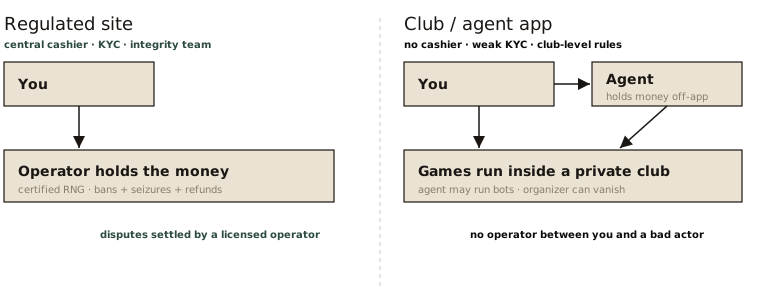
Club and agent apps (PPPoker, PokerBros, WePoker) are the cheating hotspot, with no central referee.
Getting caught on a licensed site means a seized balance and, increasingly, a cross-network ban.
The setups that survive are quiet and maintained. The ones advertised as “undetectable downloads” are bait.
Two worlds: the screen and the table
Almost every cheating question splits into two worlds: the screen and the table. This is an online software fight versus a live hardware fight, and the two barely overlap. Online, an autonomous bot screen-scrapes the table, runs the spot through a near-perfect solver, and clicks. These bots use commercial GTO engines that anyone can license, rather than secret descendants of the Libratus or Pluribus research bots which were never sold. Real-time assistance (RTA) keeps a human in the chair who is fed the solver’s answer mid-hand. Around them sit HUDs, dataminers, ghosting operations, and collusion.
Live cheating replaces code with physical devices. In an October 2025 federal case, prosecutors allege a betting ring used an X-ray table to read face-down cards, alongside a chip-tray camera and marked-card lenses. This equipment is a documented reality. Security researcher Elie Bursztein bought a working card analyser for about $1,300, confirming that these systems use hidden cameras to read edge barcodes on the deck and transmit the winning hand to an earpiece.
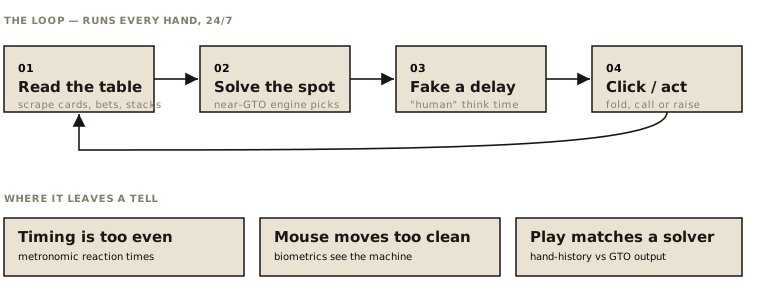
The honest part nobody selling you a bot will say
Search “pppoker cheat” or “undetectable poker bot” and the results are dominated by vendors selling a dream. Most tools are non-functional, bundled with malware, or simply take payment before vanishing. A system that survives a modern integrity team requires constant maintenance, updated whenever a site changes its detection logic. These updates happen in private channels, not on public landing pages. Once a vendor lists a tool publicly, security teams buy it, reverse-engineer the code, and map the exact signatures to build a filter.
The market is mostly liars because the product that works is never the one advertised. Real software is a service, not a download. When a room updates its client, the bot farm must patch immediately or face a ban. That is why the “one-click” solutions in the search results fail: they are static, while the environment they run in is dynamic. Claiming a tool is “undetectable” is a marketing stance, not a technical reality — the moment a tool is widely available, its fingerprint gets integrated into the room’s blocking systems.
Detection is real, and it’s winning more often
Most “online poker is rigged” talk misses the point. On licensed sites the cards come from certified random number generators, audited because the whole business depends on the deal being fair. Quietly skewing the shuffle would be commercial suicide: regulators, partners and high-volume pros would walk, and the operator’s licence and brand would be finished.
The real risk is other players cheating, and that is where the security effort goes. Modern detection watches how you play as much as what you play: mouse path, click rhythm, reaction timing, and other behavioural biometrics that make bots and real-time assistance look unnatural over big samples. Hand histories are run against solver output to spot near-perfect decision patterns; GGPoker, working with GTO Wizard, banned 31 accounts for solver-style play and barred them from the 2025 WSOP.
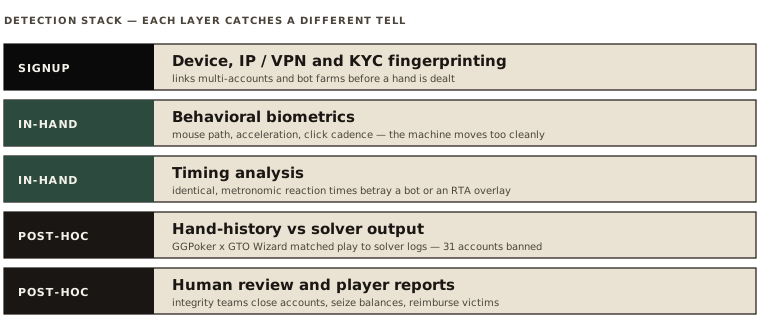
The numbers are public now, because operators have decided the deterrent is worth more than the silence:
Where to go next
This guide is organized around the questions people actually ask. Start with whichever one brought you here.
A word on what this site is
We explain how cheating works so you can recognize it, weigh the real risk, and stop getting scammed by people selling fantasies. We do not publish step-by-step instructions, we don’t guarantee anything, and we are not affiliated with any poker room named here. If you want to go past reading, the one door we point to isn’t another forum download: it’s a specialist who maintains these systems and answers straight, without the “undetectable” theatre this whole site warns you about. Read the disclaimer first, then decide.
Talk to someone who actually maintains these systems.
Here's why we're the exception to everything this file warns you about: no $30 file, no “undetectable” promise, no crypto for a link. The specialist on the other end maintains real setups for a living and will tell you plainly what's possible, what it costs, and the risk. It's a direct conversation on Telegram; if you're past the curiosity stage, start there.
Telegram groupIs cheating at online poker actually possible in 2026?
Yes, and no. The methods are real, but every serious one is a moving target. Bots and real-time assistance work until a site's detection catches up, and in 2026 detection is catching up fast. GGPoker alone confiscated over $1.1 million from 40 accounts in a single real-time-assistance sweep and refunded 4,329 players. What's almost never real is the '100% undetectable, download it now' product. Those are usually scams or malware.
What's the difference between a poker bot and RTA?
A bot plays for you: it reads the table, decides, and clicks, with no human in the seat. RTA (real-time assistance) keeps a human in the seat but feeds them a solver's answer during the hand. RTA is harder to catch because a person still moves the mouse, but both break the rules of every major site.
Which poker sites and apps get cheated the most?
The club and agent apps (PPPoker, Pokerrrr2, PokerBros, WePoker), not the big regulated rooms. On a club app there's no central cashier and no independent integrity team; an agent handles the money off-app and sometimes runs the bots themselves. Regulated sites like GGPoker and PokerStars are cheated too, but they have teams that hunt it and seize balances.
What happens if you get caught cheating at poker?
On any regulated site: account closed, entire balance confiscated, and often a cross-network ban that also bars you from live events like the WSOP. In regulated markets collusion and chip dumping can be treated as fraud. The 2025 New York ring that prosecutors allege used an X-ray table and marked-card lenses is being prosecuted federally. On gray-market apps there's no refund and no recourse; your money just disappears.